
Essential Emergency Pet Kit Every Owner Should Have

Key Highlights
A pet emergency kit helps pet owners act fast during a pet emergency, evacuation, or house fire.
Your pet disaster kit should cover food, water, medication, first aid, and safe restraint.
Medical records, contact information, and ID details help protect your pet if you get separated.
Comfort items like a blanket or toy can lower stress in an unexpected situation.
Store the emergency kit in an easy-to-grab, temperature-controlled spot and check expiration dates often.
Cats and dogs may need different supplies, but every pet emergency kit should match your own pet.

Emergency Pet Kit Every Owner Should Have
A pet emergency can happen with little warning. It might be a natural disaster, a sudden evacuation, or even a house fire. In those moments, pet owners do not have time to search for pet food, records, or a leash. That is why an emergency kit matters. It gives you a simple way to protect your pet’s safety and meet basic needs right away. A well-planned kit can go a long way when stress is high and every minute counts.
Why Every Pet Owner Needs an Emergency Pet Kit
Emergencies move fast. A natural disaster, flooded roads, or a house fire can leave you with only minutes to act. A pet emergency kit lets you grab what you need without delay, which supports your pet’s safety when normal routines stop.
Just as important, every pet parent can tailor a kit to an animal’s needs. Cats may need litter and a portable box, while dogs may need extra waste bags. Senior pets, puppies, and kittens may also need different supplies. The next sections explain why this preparation matters.
Impact of Emergencies on Pets and Families
When a pet emergency happens, stress affects everyone in the home. Pets can become scared, restless, or hard to manage. A calm animal can suddenly resist a leash, hide, or panic during an evacuation. That puts extra pressure on you when time is already short.
For a pet parent, the problem is not only getting out safely. You also need food, water, medication, and safe transport. During a house fire or severe weather event, stores may be closed, and veterinary care may be harder to reach. Without supplies ready, simple needs become serious problems.
This is why preparing your pet for disasters starts before anything goes wrong. Keep a packed bag with essentials, practice using the crate or carrier, and store it where you can reach it fast. Those steps support your pet’s safety and make a frightening moment more manageable for your family.
Common Scenarios That Require Quick Action
Some situations give very little warning. A pet parent may need to leave home quickly, shelter in place, or manage an unexpected problem while traveling. In each case, a pet emergency kit saves time and lowers confusion.
Common emergencies include the following:
A natural disaster such as wildfire, flooding, hurricane, tornado, or earthquake
A sudden evacuation after severe weather or unsafe home conditions
A house fire that forces you to leave without gathering supplies
A vehicle breakdown or unexpected situation while traveling with your pet
Short-term loss of access to stores, clean water, or veterinary help
Because these events happen fast, store your kit in an easy-to-grab, temperature-controlled place near an exit. That way, food, records, medication, and restraint items are ready when you need them most. Next, let’s look at the essential items every complete kit should include.
Essential Components of a Complete Emergency Pet Kit
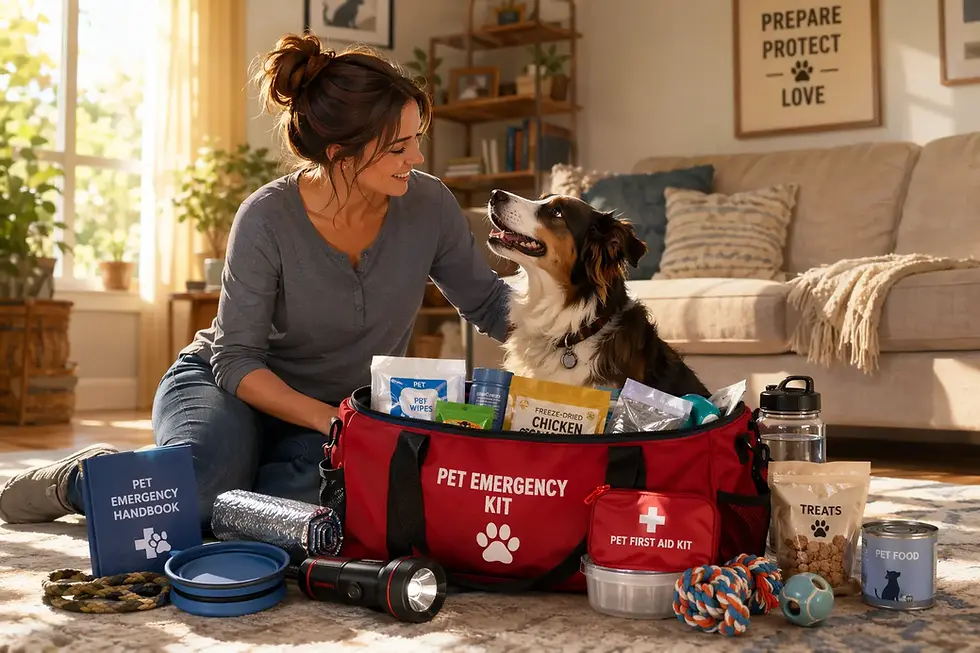
A complete pet emergency kit should support your pet for several days, not just for the first hour. The essential items usually fall into clear groups: pet food, water, medication, safe restraint, records, sanitation tools, and comfort supplies.
You should also think beyond a basic bag of first aid supplies. A good pet disaster kit includes first aid, but it also covers daily care and identification if you must leave home quickly. When you build your checklist, match it to your own pet’s age, size, and routine. The first group to review is food, water, and medication.
Food, Water, and Medication Supplies
Start with the basics your pet cannot go without. In an emergency kit, store several days of your pet's food in sealed, waterproof containers. Keep clean drinking water packed separately so your pet has a reliable supply during an emergency or evacuation.
A practical supply list includes:
Three to 10 days of regular pet food, based on the kit you are building
Clean bottled water, with enough for several days
Collapsible bowls for food and water
A one- to two-week supply of medication in labeled containers
Written dosage instructions in case someone else must help
Check expiration dates every few months and replace anything close to running out. Rotate food, refresh water, and adjust medication as prescriptions change. This simple habit keeps your emergency kit useful instead of outdated. After food and medicine, it helps to understand how a first aid kit fits into the larger plan.
First Aid Supplies vs. Comprehensive Emergency Kit: What’s the Difference?
A first aid kit and a full pet emergency kit are not the same thing. A pet first aid kit focuses on minor injuries and urgent care until you can reach a veterinarian. A full emergency kit is broader. It supports feeding, hydration, identification, transport, and comfort during a longer disruption.
Here is a simple comparison:
Kit Type | Main Purpose | Common Contents |
Pet first aid kit | Handle minor injuries or immediate care needs | Bandage material, gauze, antiseptic wipes, saline flush, non-latex gloves, tweezers, bandage scissors, thermometer, instant ice pack, syringes, flashlight |
Full pet emergency kit | Support your pet through evacuation or several days of disruption | Pet food, water, bowls, medication, medical records, contact information, leash, harness, crate, waste bags, litter supplies, blanket, toy, plus first aid supplies |
So yes, there are differences. Your pet emergency kit should include a pet first aid kit, but it should not stop there. A full setup prepares you for more than wounds alone. Identification and records are the next must-have category.
Identification, Records, and Comfort Items for Your Pet
If you get separated from your pet, identification and records become just as important as food and water. Your pet emergency kit should include contact information, medical records, and clear proof that the pet belongs to you.
Comfort items matter too. Stress can rise fast during travel, sheltering, or displacement, and familiar objects can help your pet stay calmer. A blanket, toy, or treats may make handling much easier. The next two sections break down which documents to pack and which comfort items can support your pet in a crisis.
Important Documents to Include in Your Kit
Paperwork can save time when every minute matters. Keep these items in a waterproof folder or bag inside your emergency kit. That protects sensitive information and makes it easier to share details with a shelter, sitter, or veterinarian if needed.
Important documents include:
Copies of medical records and vaccination history
Current prescription details and feeding instructions
Your veterinarian’s contact information and emergency clinic phone numbers
Microchip registration information and pet registration or adoption records
A recent photo of your pet, plus a photo of you with your pet
You can also add notes about allergies, past procedures, behavior, or daily routines. These details help if someone else must care for your pet. Once your records are packed, think about emotional support too. Familiar objects can help a frightened animal settle more quickly in an unfamiliar setting.
Comfort Items and Stress Relief Essentials
A crisis is not only about physical safety. Your pet may be scared by noise, travel, strangers, or changes in routine. For a pet parent, adding comfort items to an emergency kit is a simple way to support stress relief and make handling easier.
Useful items to keep on hand include:
A favorite blanket, bed, or small toy
Treats for reassurance or cooperation
A sturdy leash and harness
A crate or carrier that fits your pet’s size
Cleaning supplies such as waste bags, paper towels, wipes, or litter items for cats
Practice matters as much as packing. Let your pet spend time in the crate, and make sure the harness and leash fit well before an emergency happens. Those steps can reduce fear during evacuation and help your pet respond better when you need to move quickly.
Conclusion
As a pet owner, being prepared for emergencies can make all the difference in ensuring your furry friends remain safe and healthy. An emergency pet kit equipped with essential supplies, identification, and comfort items not only provides peace of mind but also equips you to act quickly when necessary. Regularly updating your kit and familiarizing yourself with its contents is crucial for an effective response during an emergency. Remember, your pets rely on you for their safety and well-being.
If you have questions or need help assembling your emergency pet kit, get in touch with our team — we're here to support you and your beloved pets. Emergency vet needed?
Get immediate care at San Diego Veterinary Urgent Care — call (619) 977-1114 to schedule.
Pet Emergency Kit FAQ
What are some common mistakes pet owners make when assembling an emergency kit?
Many pet owners pack an emergency kit once and forget it. That leads to expired food, outdated medication, missing first aid items, or records that no longer match their pet. Another mistake is storing the pet emergency kit in a hard-to-reach place when quick action is needed.
Can you recommend a checklist for building a pet disaster preparedness kit?
A simple pet disaster kit checklist includes food, water, bowls, medication, medical records, contact details, ID information, leash, harness, crate, waste supplies, and comfort items. Pet owners should adjust the emergency kit for their own pet, including age, health needs, and whether they have a cat or dog.
How often should I update or check my pet’s emergency kit items?
Check your pet emergency kit every few months. Review expiration dates on food, water, and medication, and replace worn supplies. It also helps to update records when your veterinarian changes prescriptions, vaccines, or care instructions. A regular review keeps your emergency kit ready to use.
What documents or identification should I add to my pet's emergency kit?
Include medical records, vaccination history, prescription details, microchip information, and recent photos of your own pet. Add contact information for your regular vet and emergency clinic, plus important phone numbers. Registration or adoption paperwork can also help prove ownership if you become separated during an emergency.
What supplies would you keep on hand for your pet?
Keep pet food, water, medication, first aid supplies, a leash, harness, crate, records, and a comfort item packed in your pet emergency kit. During a house fire or sudden evacuation, these essential items help you leave faster and care for your pet safely for several days.
What kind of food and water supplies should I include in a pet emergency kit?
Pack several days of regular pet food in sealed containers, along with bottled water and collapsible bowls. Your emergency kit should have enough to cover at least a short disruption, and possibly longer. Check expiration dates often, rotate supplies, and replace anything opened, damaged, or outdated.


Comments